Free Online Financial Education: Modern Tools, Strategies, and Key Risks
Introduction: The Growing Importance of Free Online Financial Education
Free online financial education is changing how investors approach markets. Today, economic landscapes shift rapidly. Therefore, clear, accessible, and updated information forms the backbone of strategic investment decisions. Online resources now reach far beyond what was possible even a decade ago. As a result, investors from all backgrounds can learn about risk, portfolio management, and financial products without the cost barriers that once favored only a select few.
Modern financial literacy relies on a wide range of digital tools, including blogs, forums, interactive courses, and data simulators. These online offerings are not only widespread, but also sophisticated in both depth and delivery. However, this ongoing evolution requires investors to understand not just what is available, but also how to use free online financial education resources for stronger, smarter outcomes.
Defining Free Online Financial Education Resources
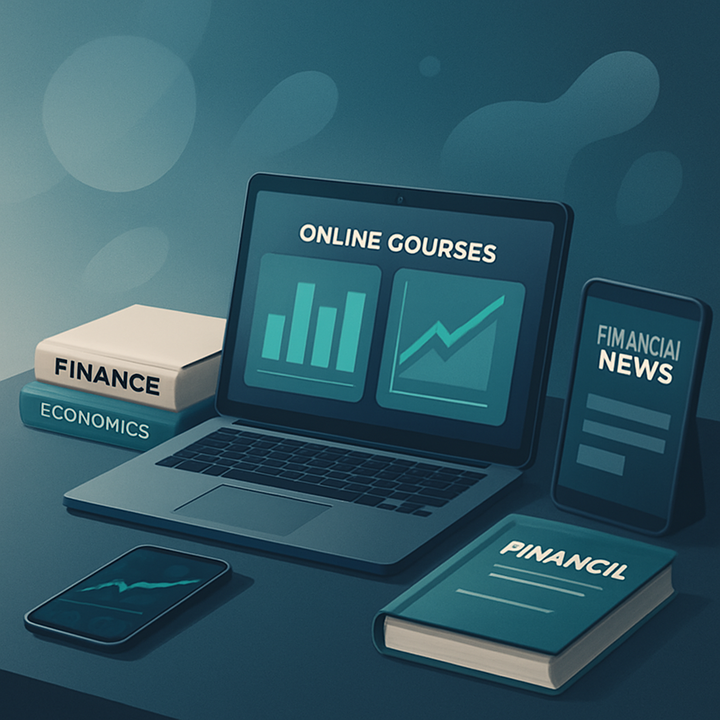
Free online financial education resources span a wide spectrum. MOOCs (Massive Open Online Courses), such as those found on Coursera, edX, or Udemy, offer professional instruction at no direct cost. Other tools include YouTube financial education channels, comprehensive blogs, podcasts hosted by investment experts, and advanced simulators that mimic real trading environments.
Sites like Investopedia and Khan Academy provide structured lessons. They cover topics ranging from saving and budgeting to advanced portfolio theory and derivatives. In addition, many fintech platforms offer free content, calculators, and decision aids that help demystify stocks, ETFs, cryptocurrencies, and insurance. Regulators and industry organizations—including the Securities and Exchange Commission (SEC) and the CFA Institute—publish their own e-learning modules and research libraries.
This broad spectrum covers basic financial principles, technical market analysis, emerging trends like blockchain or ESG investing, and practical investment tips for both beginners and experts.
Why Free Online Financial Education Matters for Investors
Global markets now reflect unprecedented complexity. There are more asset classes and financial products than ever before. Regulatory changes, geopolitical events, and technological advances occur continuously. Free online financial education resources bridge massive information gaps. They enable individuals everywhere to access up-to-date research, critical thinking frameworks, and case studies.
These resources foster financial inclusion by making high-quality education available regardless of geography or income. For self-directed investors, practicing theory in a simulator or reviewing analysis on trusted platforms can mean the difference between costly mistakes and informed, data-driven choices. Financial education platforms also offer real-time market data, empower users to test different strategies risk-free, and drive better long-term outcomes.
Moreover, as the financial industry grows more transparent, investors who take ownership of their learning and continually update their knowledge will be better positioned to respond swiftly and wisely to both shocks and opportunities.
Maximizing the Value of Free Online Financial Education Resources
To get the most from free online financial education, investors should make careful, strategic choices. Not all content is created equal. Therefore, it is important to prioritize platforms recognized for accuracy, transparency, and expert oversight. When possible, blend foundational courses—such as Khan Academy’s finance lessons or Coursera’s investment management programs—with platforms that provide up-to-the-minute market data like Yahoo Finance or Google Finance.
Interactive simulators and quizzes foster active learning. They help users test ideas in a dynamic yet risk-free environment. Setting up a routine learning schedule—focusing on a new topic each week or tracking real market developments—builds discipline and deepens comprehension over time. In addition, scientific approaches such as spaced repetition or regular self-assessments can enhance retention.
A critical mindset is essential. Always check instructor credentials, compare advice across sources, and cross-reference data with official bodies such as the SEC or CFA Institute. Peer-driven forums like Reddit’s personal finance subgroup, Bogleheads, or Stack Exchange can provide practical insights. However, it’s important to distinguish anecdotal stories from statistically robust recommendations. By combining digital education with traditional sources, such as annual reports or official market research, investors create comprehensive, well-rounded financial expertise.
Top Platforms and Must-Use Tools for Financial Learning
Several standout platforms excel at delivering free online financial education. Khan Academy’s finance modules introduce topics from basic banking to complex investment strategies. Coursera and edX offer university-level instruction, often free to audit, across a wide array of finance and economics subjects.
YouTube hosts many informative channels. For example, CNBC and Bloomberg provide daily news and interviews, while TED-Ed breaks down big ideas into accessible insights. Investopedia’s library defines key terms and guides learners through tutorials on both foundational and advanced subjects. Their trading simulator lets users “invest” with virtual cash, building experience before risking real money.
Other powerful tools include:
- Podcasts like NPR’s “Planet Money” and “The Indicator” that explain economic shifts in practical terms.
- Simulation sites such as HowTheMarketWorks, which encourage hands-on learning by enabling users to build and test portfolios.
- Open-access data from organizations like the World Bank or IMF, allowing for in-depth, independent analysis.
- Binance Academy and CoinMarketCap, which provide context on blockchain and digital assets.
Always verify that platforms update content frequently and disclose their research sources transparently.
Practical Use Cases: Putting Free Financial Education into Action
Consider an investor who wants to evaluate sector-based ETFs. They might learn the theory behind diversification with a Khan Academy course. Next, they could watch sector performance breakdowns on Bloomberg’s YouTube channel. Then, they can practice by constructing a mock portfolio within a free stock simulator.
Another user interested in emerging technologies could access video modules from Binance Academy. They might supplement that learning with podcasts analyzing blockchain’s latest trends. For global macroeconomic understanding, incorporating World Bank datasets into self-designed spreadsheets lets individuals practice data-driven scenario analysis.
In each case, layering information—from foundational concepts to real-time trends—results in more confident, well-grounded investment moves. Forums and collaborative sites also provide chances to clarify doubts or compare strategies. However, investors should filter these discussions through a lens of skepticism, always seeking substantiated expertise.
Risks and Limits: Staying Smart with Free Online Education
While the benefits of free online financial education are immense, some dangers exist. Certain platforms feature user-generated content that can spread misinformation or speculative advice. This may tempt individuals into poor risk decisions. Outdated material, often found on less-maintained sites, can also mislead and result in flawed strategies.
Gamification, while engaging, sometimes oversimplifies complex subjects or builds false confidence. Not all platforms are regulated or vetted. Therefore, investors should be vigilant about which resources to trust. Overwhelming content volume can also lead to analysis paralysis unless users plan their learning around clearly defined, achievable goals.
Nevertheless, the advantages of self-paced, personalized learning are considerable. The key is to combine cautious source verification, structured learning, and continual adaptation. This approach ensures that the immense volume of free resources becomes an asset rather than a liability.
Emerging Tech: How AI and Digital Innovation Are Shaping Financial Education
New technologies now enhance online financial learning at a rapid pace. Artificial intelligence and machine learning algorithms personalize course pathways based on individual performance. They recommend further study in areas where users struggle most. Virtual tutors and AI-powered chatbots answer questions instantly and direct learners to relevant resources.
Gamified, immersive simulations place learners in realistic market scenarios. These simulations provide data-driven feedback and adaptive difficulty. Blockchain integration allows users to securely track credentials and even share progress with potential employers. The combination of real-time data feeds and mobile app integration means financial learners now access tips, analytics, and lessons wherever they go.
Regulatory agencies increasingly use these technologies to advance consumer protection. For investors, adopting tech-enhanced education tools is likely to become a basic expectation. This approach helps them stay ahead in volatile markets and comply with ever-changing rules.
Planning for the Future: Adopting Free Online Financial Education as a Core Routine
Investors who want to excel must view free online financial education as a regular part of their personal and professional development—not just an optional supplement. By establishing routines, setting learning objectives, and combining digital and traditional sources, users build rigorous and adaptable knowledge bases.
With ongoing development in AI and virtual reality, future online education will become even more tailored, data-driven, and accessible. The best-prepared investors are already embracing these platforms. They recognize that expertise in personal finance and markets comes not from one-off courses, but from sustained, evidence-based learning.
Adaptability, critical thinking, and continuous self-assessment are more crucial than ever as global markets change rapidly. Free online financial education lays the groundwork for resilience, improved decision-making, and strategic success.
Conclusion: Reinforcing the Value of Financial Education Resources
Free online financial education is a game changer for investors. With accurate, regularly updated, and diverse resources, individuals can enhance their financial literacy, manage risks, and spot opportunities across all types of investments. As technology and markets continue to evolve, embracing digital learning ensures every investor remains both competitive and informed. To deepen your understanding, explore further insights and resources within our Financial Education category.

Elena Voss is a financial systems writer and risk analyst at SahViral, specializing in credit cycles, liquidity risk, and institutional incentives. Her work focuses on how structural forces — rather than short-term events — shape long-term financial outcomes. With a system-oriented perspective, she examines how capital flows, regulatory design, and macroeconomic pressure influence financial stability for both institutions and households. Her writing emphasizes clarity, structural analysis, and long-term relevance over market noise or speculative narratives.

Post Comment